- Dates
May 7, 2022 – January 8, 2023
- Location
Japanese American National Museum (JANM)
- Website
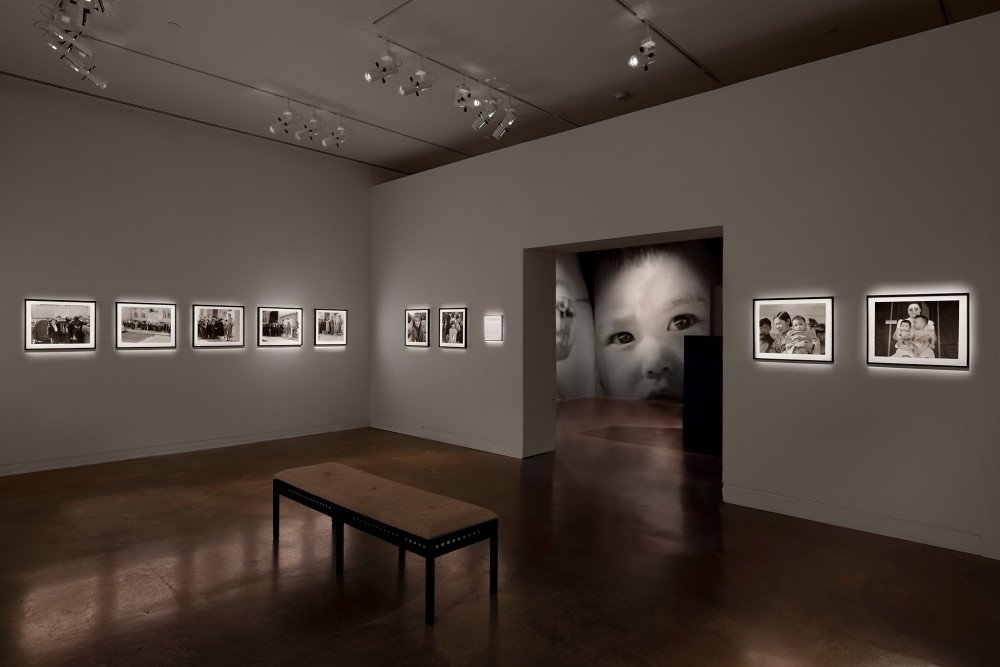
Timed to open on the same Saturday in May that, eighty years ago, suddenly turned Little Tokyo into a ghost town, BeHere / 1942 at JANM opened on May 7, 2022. The exhibition used a variety of media forms—from hyper-enlarged photographs to cutting-edge augmented reality technology—to help us see, in a new light, this dark moment in the history of Los Angeles, and of the United States.
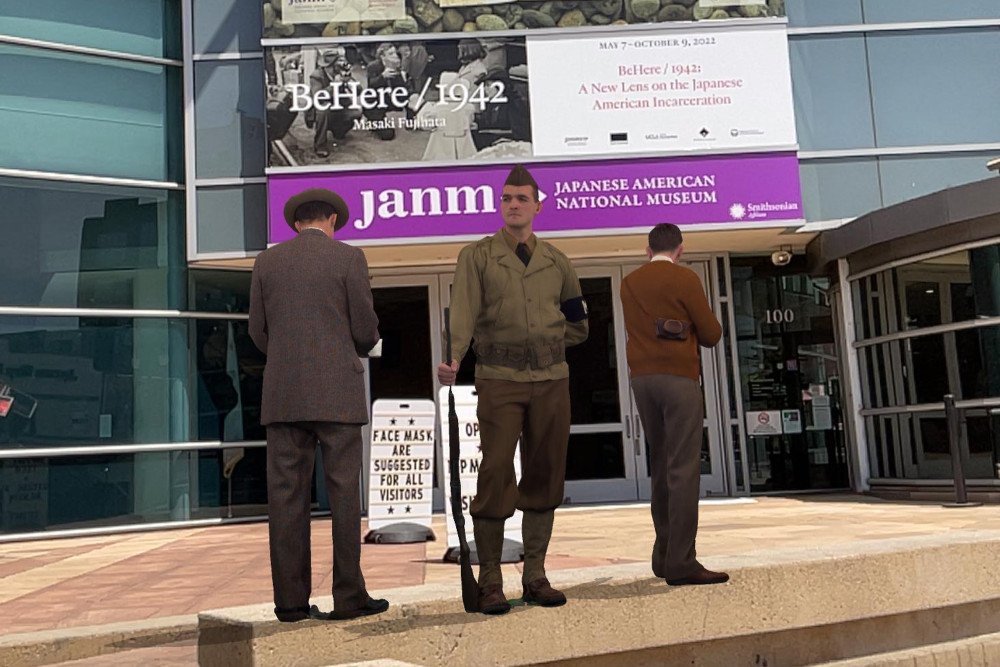
In 1942, the building that housed Nishi Hongwanji temple was located across the street from a block of warehouses, on East 1st Street and North Central Avenue. You can still see it there today, though now it is an annex of the Japanese American National Museum (JANM). The street in front of the old temple has since been closed off to traffic, turned into a kind of public square where pedestrians can wander. If you stand on the corner facing the plaza, with the former Nishi Honwanji Temple to your left, you see the annex of the Museum of Contemporary Art (MOCA) straight ahead, while JANM is off to your right. We were fortunate to be able to use this location for the AR installation that was the centerpiece of BeHere / 1942.
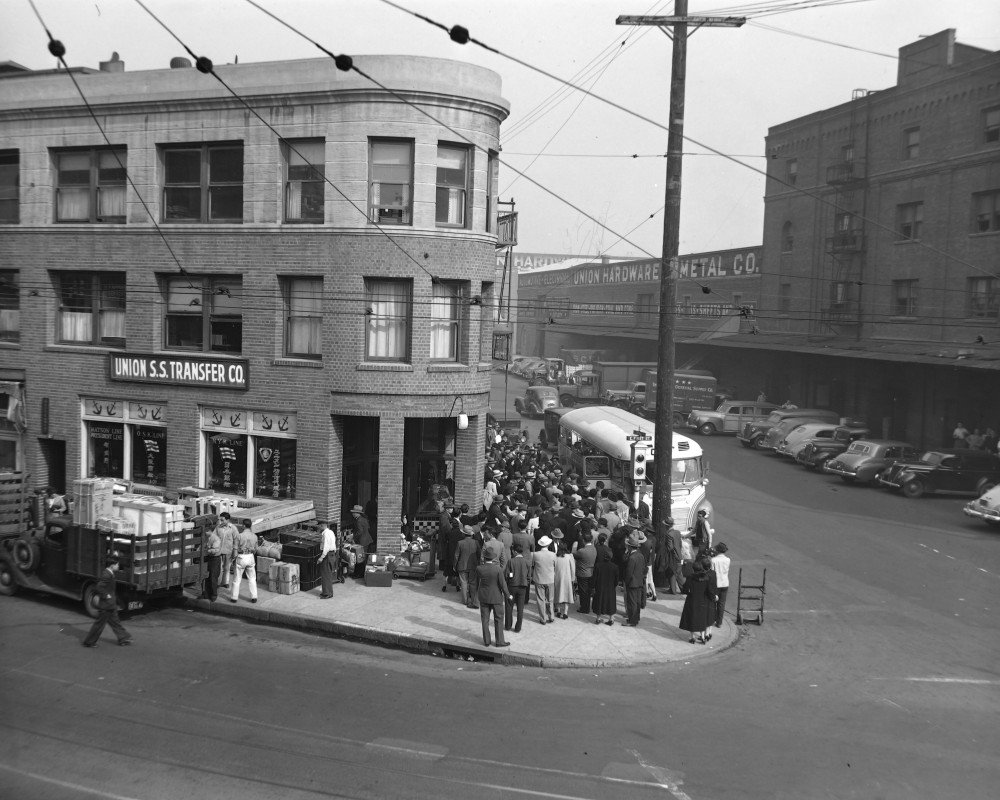
The buses in front of Nishi Hongwanji Temple that appear in those famous photographs from Toyo Miyatake Studio were long-distance buses belonging to a company called Santa Fe Trailways. The company’s pamphlets advertised the bus as having a low center of gravity, offering a much improved, more comfortable riding experience; safe glass windows that provided a wide, spacious view; powerful air brakes; and the world’s first air conditioned cabin. The buses in the photos seem to be a 1937 model manufactured by ACF Brill. Though you can’t tell from the black and white photograph, pamphlets and timetables show that the paint on the exterior was cream yellow and red. Usually, a bus’s destination would be indicated by a sign on the front, but in the Toyo Miyatake Studio photographs the sign is blank. In some pictures of the forced removal the sign says SPECIAL. It is a subtle way to frame what is happening: a pleasant trip on a bus headed to a special location.
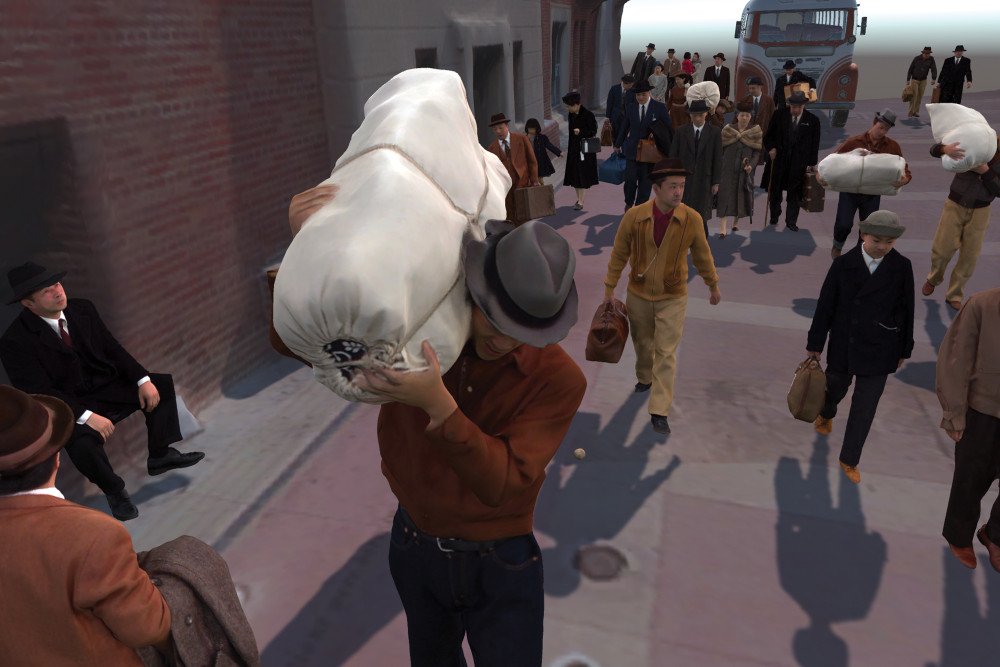
The composite scene was inspired by numerous photographs of the forced removal. The historic Nishi Hongwanji Temple and JANM campus were recreated from images shot by drone and processed using photogrammetry; human figures were recorded using volumetric capture technology. In the AR application, the resulting people and vehicles are layered over the actual environment.
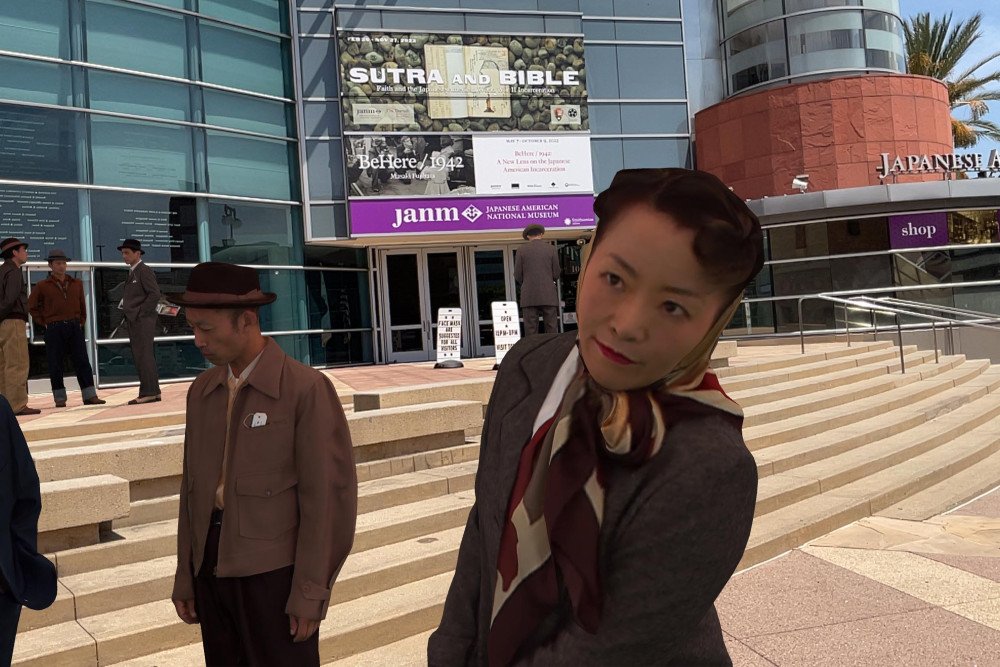
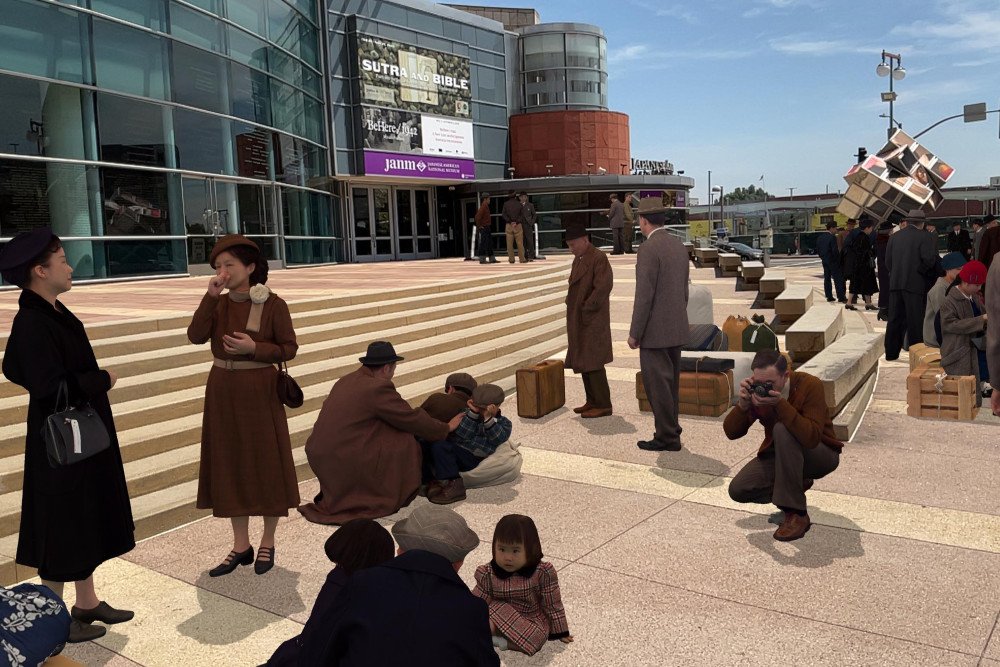
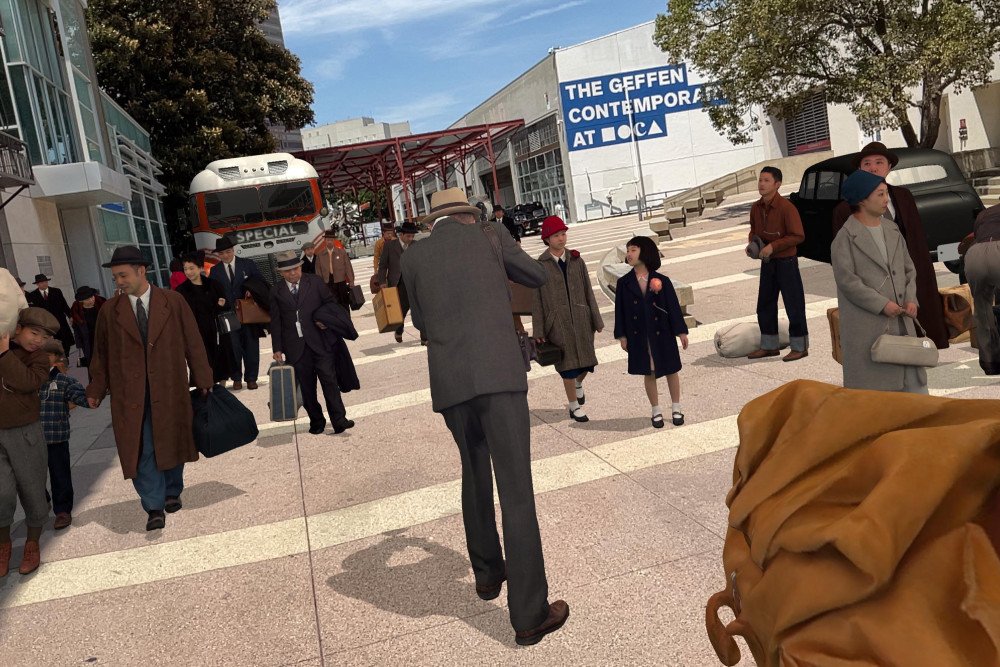
The floorplan below reflects the rooms of BeHere / 1942 at JANM.
 1
2
3
4
5
1
2
3
4
5
-
In the Depths of the Eye TEST
Looking at a photograph is like exploring the ruins of an old building—each gives us a similar sort of pleasure.
-
“Las Meninas” 1942
One major shift that occurred in the field of European art at the beginning of the modern period was the emergence of mirrors as objects represented in paintings.
-
The Old Santa Fe Station, an Epic Poem
Things that cannot be understood from a single photograph in isolation become clearer when seen across multiple images, which gradually form a larger context and story.
-
Looking Through the Camera
How we think about the time and space of 1942 depends on the stance we adopt toward our engagement with the past. Do we enter that world as complete outsiders? As tourists? In conceiving a work like this, it is crucial to think about the role the visitor plays.
-
Recreating the Crowd at Nishi Hongwanji
In 1942, the building that housed Nishi Hongwanji temple was located across the street from a block of warehouses, on East 1st Street and North Central Avenue. You can still see it there today, though now it is an annex of the Japanese American National Museum (JANM).